
Position
Name
Professor
Prof. Jose Azaña

Prof. Azaña
José Azaña was born in Toledo, Spain. He received the Telecommunication Engineer degree (six years engineering program) and PhD degree in Telecommunication Engineering from the Universidad Politécnica de Madrid (UPM), Spain, in 1997 and 2001, respectively. He completed part of his doctoral research at the University of Toronto, ON, Canada (1999) and the University of California, Davis, CA, USA (2000).
From September 2001 to mid 2003 he worked as a Postdoctoral Research Fellow at McGill University Montreal, QC, Canada. In 2003, he joined the Institut National de la Recherche Scientifique – Centre Energie, Matériaux et Télécommunications (INRS-EMT) in Montreal, where he is currently a Full Professor. From 2011 to 2021, he has been the holder of the Canada Research Chair in “Ultrafast Photonic Signal Processing”.
Prof. Azaña’s research interests include ultrafast photonics, optical signal processing, all-fiber and integrated-waveguide (silicon-photonic) technologies, optical pulse shaping and waveform generation, fiber-optic telecommunications, all-optical (classical and quantum) computing, measurement of ultrafast events, light pulse interferometry and broadband microwave signal generation and processing. He has to his credit above 600 publications in top scientific journals and technical conferences, including about 250 contributions in high-impact peer-review journals (with most publications in the OSA, IEEE, and Nature publishing groups) and many invited and co-invited journal publications and presentations in leading international meetings. His published research work has been highly cited by his peers and some of his original optical signal processing and analysis methods are widely utilized for scientific research and practical applications.
Prof. Azaña is a member of the Center of Optics, Photonics and Lasers (COPL), a strategic research network funded by the Govt. of Quebec, and he is also a Fellow member of the OSA. He has served in the technical program committee of numerous scientific conferences and technical meetings, and he has been a Guest Editor of 5 monographs devoted to the area of Optical Signal Processing, published by EURASIP J. Appl. Signal Proc. (2005), IEEE/OSA J. of Lightwave Technol. (2006), Chinese Science Bulletin (2014), Elsevier Opt. Comm. (2016) and the IEEE Photon. Technol. Lett. (2019). Presently, he is a Senior Editor of the IEEE Photonics Journal. Prof. Azaña’s research outcome has been recognized with several research awards and distinctions, including the XXII national prize for the “best doctoral thesis in data networks” from the Association of Telecommunication Engineers of Spain (2002), the “extraordinary prize for the best doctoral thesis” from his former university, UPM (2003), the 2008 IEEE-Photonics Society Young Investigator Award, the 2009 IEEE-MTT Society Microwave Prize, and the 2020 Canada Brockhouse Prize for interdisciplinary research in science and engineering (with R. Morandotti, INRS-EMT).
From September 2001 to mid 2003 he worked as a Postdoctoral Research Fellow at McGill University Montreal, QC, Canada. In 2003, he joined the Institut National de la Recherche Scientifique – Centre Energie, Matériaux et Télécommunications (INRS-EMT) in Montreal, where he is currently a Full Professor. From 2011 to 2021, he has been the holder of the Canada Research Chair in “Ultrafast Photonic Signal Processing”.
Prof. Azaña’s research interests include ultrafast photonics, optical signal processing, all-fiber and integrated-waveguide (silicon-photonic) technologies, optical pulse shaping and waveform generation, fiber-optic telecommunications, all-optical (classical and quantum) computing, measurement of ultrafast events, light pulse interferometry and broadband microwave signal generation and processing. He has to his credit above 600 publications in top scientific journals and technical conferences, including about 250 contributions in high-impact peer-review journals (with most publications in the OSA, IEEE, and Nature publishing groups) and many invited and co-invited journal publications and presentations in leading international meetings. His published research work has been highly cited by his peers and some of his original optical signal processing and analysis methods are widely utilized for scientific research and practical applications.
Prof. Azaña is a member of the Center of Optics, Photonics and Lasers (COPL), a strategic research network funded by the Govt. of Quebec, and he is also a Fellow member of the OSA. He has served in the technical program committee of numerous scientific conferences and technical meetings, and he has been a Guest Editor of 5 monographs devoted to the area of Optical Signal Processing, published by EURASIP J. Appl. Signal Proc. (2005), IEEE/OSA J. of Lightwave Technol. (2006), Chinese Science Bulletin (2014), Elsevier Opt. Comm. (2016) and the IEEE Photon. Technol. Lett. (2019). Presently, he is a Senior Editor of the IEEE Photonics Journal. Prof. Azaña’s research outcome has been recognized with several research awards and distinctions, including the XXII national prize for the “best doctoral thesis in data networks” from the Association of Telecommunication Engineers of Spain (2002), the “extraordinary prize for the best doctoral thesis” from his former university, UPM (2003), the 2008 IEEE-Photonics Society Young Investigator Award, the 2009 IEEE-MTT Society Microwave Prize, and the 2020 Canada Brockhouse Prize for interdisciplinary research in science and engineering (with R. Morandotti, INRS-EMT).
Post-Doctoral Research Fellows
Dr. Hao Sun

Dr. Sun
Hao Sun earned his B.Sc. in Physics from Shandong University (2015) followed by an M.S. in Electronics and Communication Engineering from the Institute of Semiconductor, Chinese Academy of Sciences (2018). Awarded the prestigious McGill Engineering Doctoral Award, he completed his Ph.D. in Electrical Engineering at McGill University in 2022. His doctoral research pioneered advancements in integrated photonic devices, with particular expertise in subwavelength grating waveguides, waveguide Bragg gratings, and their applications in microwave photonic systems.
Hao Sun is currently a Postdoctoral Fellow in Prof. José Azaña’s group at INRS-EMT. His work develops novel optical computing architectures and photonic neural network implementations using optical signal processing techniques. These innovations promise to revolutionize artificial intelligence hardware by enabling ultra-fast, energy-efficient optical computing platforms that overcome fundamental limitations of conventional electronic systems.
Hao Sun is currently a Postdoctoral Fellow in Prof. José Azaña’s group at INRS-EMT. His work develops novel optical computing architectures and photonic neural network implementations using optical signal processing techniques. These innovations promise to revolutionize artificial intelligence hardware by enabling ultra-fast, energy-efficient optical computing platforms that overcome fundamental limitations of conventional electronic systems.
Dr. Xinyi Zhu

Dr. Zhu
Xinyi Zhu earned her B.Sc. in Optical Communication from the University of Electronic Science and Technology of China in 2015. She then pursued her master’s degree at the Institute of Semiconductors, Chinese Academy of Sciences, where she conducted research on “Arbitrary Waveform Generation Based on Frequency-to-Time Mapping Technique.” In 2024, she completed her Ph.D. under the supervision of Prof. José Azaña, with a thesis titled “Photonics-Based Time-Frequency Analysis and Processing of High-Speed Electromagnetic Waves,” which earned her the prestigious INRS Prize for Best Ph.D. Thesis. Currently, she is a postdoctoral fellow in Prof. Azaña’s group, working on integrated silicon photonic chips and optical neural networks.
Xinyi Zhu is a member of IEEE. She has authored 9 journal articles in leading publications, including Optica, IEEE, and Nature portfolios. She has also presented her work in over 20 conference contributions at international scientific meetings. In recognition of her research excellence, she was awarded the IEEE Student & Young Professionals Travel Grant at the 2024 Summer Topicals Meeting Series.
Xinyi Zhu is a member of IEEE. She has authored 9 journal articles in leading publications, including Optica, IEEE, and Nature portfolios. She has also presented her work in over 20 conference contributions at international scientific meetings. In recognition of her research excellence, she was awarded the IEEE Student & Young Professionals Travel Grant at the 2024 Summer Topicals Meeting Series.
PhD Students
Alexandre Le Cozler

Mr. Le Cozler
Alexandre Le Cozler received a Master’s degree in Fundamental Physics and the Agrégation in Physics from France. His academic training focused on optics, wave physics, and theoretical modeling. During his studies, he conducted research at the FOTON Institute, where he worked on temporal Talbot effects in optical fibers, with particular attention to phase noise mitigation.
He is currently pursuing his Ph.D. in the Photonic Signals and Systems Group at INRS-EMT, Université du Québec, under the supervision of Prof. José Azaña. His research focus on photonic signal processing and ultrafast optics, with a particular focus on time-domain phenomena and their applications in advanced optical systems.
He is currently pursuing his Ph.D. in the Photonic Signals and Systems Group at INRS-EMT, Université du Québec, under the supervision of Prof. José Azaña. His research focus on photonic signal processing and ultrafast optics, with a particular focus on time-domain phenomena and their applications in advanced optical systems.
Connor Rowe

Mr. Rowe
Connor Rowe completed his bachelor’s degree in Honours Mathematical Physics at the University of Waterloo in 2020, with double minors in Pure Mathematics and Astrophysics. He completed a Master’s degree in Energy and Materials Science in 2023 with Prof. José Azaña. He is now working towards his PhD in implementing various other signal processing algorithms in photonic hardware, including neural networks and related concepts. He won the INRS award for best Master’s thesis, titled “Ultrafast Real-Time Photonic Spectrograms,” as well as the INRS Director General’s Award of Excellence. He was supported through his Master’s degree by various scholarships, including the NSERC Alexander Graham Bell Scholarship, and for his PhD was awarded both the NSERC Postgraduate Scholarship – Doctoral and the FRQNT Doctoral Research Scholarship, among 27 other awards and recognitions for his research and community involvement.
Mr. Rowe is a member of SPIE, Optica, and the IEEE Photonics Society. He has published seven full length journal papers, including an invited review in NPJ Nanophotonics, has published 27 papers in various peer-reviewed and international conference proceedings, and was granted patent for his research in 2022. In 2024, his first-author contribution to APL Photonics was included in the Future Luminary Collection, highlighting innovative research from young scientists. He has won a number of awards for public speaking, including third place at the CAGS National 3-Minute Thesis Showcase in Victoria, BC, and first place at the International Microwave Symposium 3-Minute Thesis Competition. For the last three years, he has volunteered as an executive member of the INRS Photonics Student Association, and he is the founder and President of the INRS EMT Scientific Colloquium.
Mr. Rowe is a member of SPIE, Optica, and the IEEE Photonics Society. He has published seven full length journal papers, including an invited review in NPJ Nanophotonics, has published 27 papers in various peer-reviewed and international conference proceedings, and was granted patent for his research in 2022. In 2024, his first-author contribution to APL Photonics was included in the Future Luminary Collection, highlighting innovative research from young scientists. He has won a number of awards for public speaking, including third place at the CAGS National 3-Minute Thesis Showcase in Victoria, BC, and first place at the International Microwave Symposium 3-Minute Thesis Competition. For the last three years, he has volunteered as an executive member of the INRS Photonics Student Association, and he is the founder and President of the INRS EMT Scientific Colloquium.
Geunweon Lim

Mr. Lim
Geunweon Lim received the B.Eng. and M.S. degrees in Electrical and Computer Engineering from the University of Seoul, South Korea, in 2020 and 2022, respectively. During his M.S. studies, he worked on optical sensing and all-optical modulation under the supervision of Prof. Ju Han Lee in the Lasers & Optical Semiconductors Laboratory. He is currently pursuing a Ph.D. degree in the Photonic Signals and Systems Group at INRS-EMT, Université du Québec, Canada, under the supervision of Prof. José Azaña. His current research interests include ultrafast optical signal analysis and processing.
Majid Goodarzi
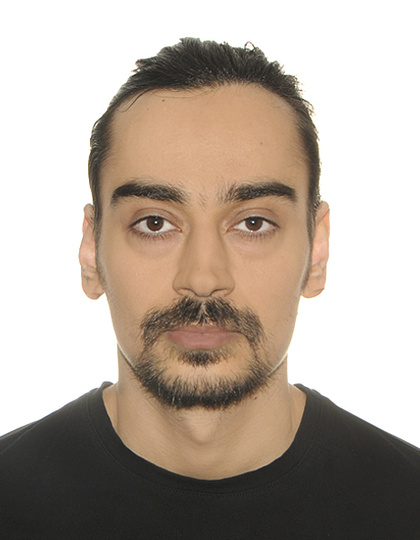
Mr. Goodarzi
Majid Goodarzi received his M.Sc. degree in Electrical Engineering from K. N. Toosi University of Technology, Tehran, Iran, where he worked on nanophotonics, plasmonics, and meta-optics. He is currently pursuing a Ph.D. degree in Telecommunications in the Photonic Signals and Systems Group at INRS-EMT, Université du Québec, under the supervision of Prof. José Azaña. His research interests include optical signal processing, ultrafast photonics, and microwave photonics, with particular focus on fiber-optic techniques for optical noise filtering and time-frequency analysis.
Md Moinul Islam Khan

Mr. Khan
Md Moinul Islam Khan received his B.Sc. in Electrical and Electronic Engineering from the Islamic University of Technology (IUT), Bangladesh, in 2021. For his undergraduate thesis, he designed novel photonic crystal fiber structures for surface plasmon resonance-based sensors with high sensitivity and resolution. Following graduation, he briefly served as a Lecturer at Sonargaon University and Daffodil International University in Dhaka, Bangladesh. In 2025, Moinul completed his M.Sc. in Electrical Engineering at McGill University, Canada, specializing in nonlinear optics and specialty soft glass fiber fabrication. His master’s research addressed the bottleneck of mid-infrared (MIR) polarization control and demonstrated the first proof-of-concept in-line polarization control in different soft glass fluoride and chalcogenide fibers, achieving remarkable polarization extinction ratios. This work marked a significant step toward the development of robust all-fiber MIR devices and systems.
Moinul is currently pursuing his Ph.D. in the Photonic Signals and Systems Group at INRS-EMT under the supervision of Prof. José Azaña. His research interests include ultrafast photonics and optical signal processing. He is a member of Optica and SPIE. His research works have been published through 13 journal articles and 2 international conference proceedings, including 2 first-author contributions, across the Optica, IEEE, Elsevier, Wiley, Springer Nature, and IOP publishing groups. Throughout his academic career, he has received several awards, including the INRS Bourse d’exemption des frais de scolarité majorés, McGill Graduate Excellence Award in Engineering, Dr. Y Lin-Alexander Fellowship in Engineering, McGill Engineering Doctoral Award (MEDA), SPIE Optics and Photonics Education Scholarship (2023 & 2026), Bangladesh-Sweden Trust Fund Travel Grant, and OIC-IUT Scholarship.
Moinul is currently pursuing his Ph.D. in the Photonic Signals and Systems Group at INRS-EMT under the supervision of Prof. José Azaña. His research interests include ultrafast photonics and optical signal processing. He is a member of Optica and SPIE. His research works have been published through 13 journal articles and 2 international conference proceedings, including 2 first-author contributions, across the Optica, IEEE, Elsevier, Wiley, Springer Nature, and IOP publishing groups. Throughout his academic career, he has received several awards, including the INRS Bourse d’exemption des frais de scolarité majorés, McGill Graduate Excellence Award in Engineering, Dr. Y Lin-Alexander Fellowship in Engineering, McGill Engineering Doctoral Award (MEDA), SPIE Optics and Photonics Education Scholarship (2023 & 2026), Bangladesh-Sweden Trust Fund Travel Grant, and OIC-IUT Scholarship.
Sebastien Quatresooz
Seyedeh Nazanin Kamali [co-supervised with Prof. Tarek Djerafi, INRS-EMT]

Ms. Kamali
Nazanin Kamali earned her B.Sc. in Electrical Engineering (Electronics) from Shahid Beheshti University in Tehran, Iran. She then completed her master’s degree in Electrical Engineering (Communication Systems) at the University of Mashhad, Iran, where she conducted research in information theory and gained experience in signal processing and neural networks.
After conducting research and laboratory work on optical neural networks at INRS, she began her Ph.D. in Telecommunications in 2023 under the co-supervision of Professor Tarek Djerafi and Professor Jose Azana. Her doctoral research focuses on translating concepts from linear optics to the microwave domain for applications in microwave analog signal processing.
During her Ph.D., she has been volunteering in several academic and professional organizations, including the INRS Student Association, the IEEE Student Branch at INRS, IEEE WIE Montreal, and the STARaCom student committee, where she contributes to grant applications, outreach activities, and academic events. In recognition of these voluntary contributions, she received the INRS Foundation Board Scholarship, which recognizes and supports women’s representation in the student community.
In parallel with her Ph.D. research, she is an RF Filter Developer Intern at Ericsson in Ottawa, where she conducts various RF filter verification tests and works on cavity filter design, broadening her experience in industrial RF engineering and telecommunications infrastructure.
After conducting research and laboratory work on optical neural networks at INRS, she began her Ph.D. in Telecommunications in 2023 under the co-supervision of Professor Tarek Djerafi and Professor Jose Azana. Her doctoral research focuses on translating concepts from linear optics to the microwave domain for applications in microwave analog signal processing.
During her Ph.D., she has been volunteering in several academic and professional organizations, including the INRS Student Association, the IEEE Student Branch at INRS, IEEE WIE Montreal, and the STARaCom student committee, where she contributes to grant applications, outreach activities, and academic events. In recognition of these voluntary contributions, she received the INRS Foundation Board Scholarship, which recognizes and supports women’s representation in the student community.
In parallel with her Ph.D. research, she is an RF Filter Developer Intern at Ericsson in Ottawa, where she conducts various RF filter verification tests and works on cavity filter design, broadening her experience in industrial RF engineering and telecommunications infrastructure.
Master Students
Fatma Bargui

Ms. Bargui
Fatma Bargui is a Master’s student at INRS-EMT in the Photonic Signals and Systems group. She holds an engineering degree in telecommunications and has practical experience in optical fiber networks. Her current research focuses on ultrafast photonics and optical signal processing.
Nolan Haines [co-supervised with Prof. Shervin Vakili, INRS-EMT]
Technician
Robin Helsten

Mr. Helsten
Rob Helsten completed a BSc in physics from the University of Waterloo in 2004. Upon obtaining that degree he relocated to Montreal to study under the supervision of professor Roberto Morandotti. In 2007 he received a MSc degree for his work entitled “Characterization of the Electro-Optical Effect in CBN Thin Films”. He is Currently employed by the UOP group as the lab technician.